
Stock vs Whiteline Performance: Why Your Sway Bar & End Links Might Be Holding You Back
You know that feeling. You turn into a corner a little harder than usual and there's this half-second of nothing — a soft, disconnected moment before the car actually starts doing what you asked it to. Then the body leans, the outside tire loads up late, and by the time everything catches up, you're already through the apex wondering why the car felt like it was thinking about it instead of just doing it.
That's not your imagination, and it's not "just how the car is." That's stock suspension doing exactly what it was engineered to do. The problem is what it wasn't engineered for.
What Is a Sway Bar (and Its End Links), and What Do They Actually Do?
A sway bar's whole job is to resist body roll by tying the left and right sides of the suspension together, so when you turn and weight shifts to the outside, the bar fights back and keeps the car flatter. The end links are the connection between the bar and the suspension — small parts, but the sway bar is only as effective as they are. If the link flexes, wears, or has slop in it, none of the bar's stiffness actually makes it to the wheel. You can have the best sway bar in the world and still feel vague if the link connecting it is the weak point.
Where stock parts run out of road
Factory engineers aren't building end links and sway bars to be bad — they're building them to a completely different brief than we care about. Stock components are designed around ride comfort, NVH (noise, vibration, harshness), manufacturing cost, and a service life measured in "long enough to outlast the warranty." Performance response is, at best, a secondary consideration.
In practice, that shows up a few ways:
- Soft rubber bushings at the link ends are great for isolating road noise and harshness, but they also absorb and delay the force the sway bar is supposed to transfer — exactly the opposite of what you want mid-corner.
- Thin-wall or plastic end links are cheap to produce and fine for the mild loads of daily driving, but they flex, wear, and eventually develop play. Some owners find the hardware backing off entirely after the factory link has been stressed past what it was built for.
- Sway bars sized for comfort, not cornering mean even a car with sharp steering and a stiff chassis can still feel like it's leaning more than it should, because the bar just isn't doing enough work.
None of this means the factory parts are defective. It means they were solving a different problem than the one you're feeling right now.
What actually changes with Whiteline
Whiteline built their reputation specifically around closing this gap, and it shows in how the parts are designed:
- Adjustable sway bars let you dial in roll stiffness for your setup instead of being locked into one factory rate — front and rear can be tuned independently to shift the car's handling balance toward more front grip, more rotation, or somewhere in between.
- Solid, heavier-gauge construction means the bar itself is doing more of the work, instead of relying on suspension geometry to mask body roll.
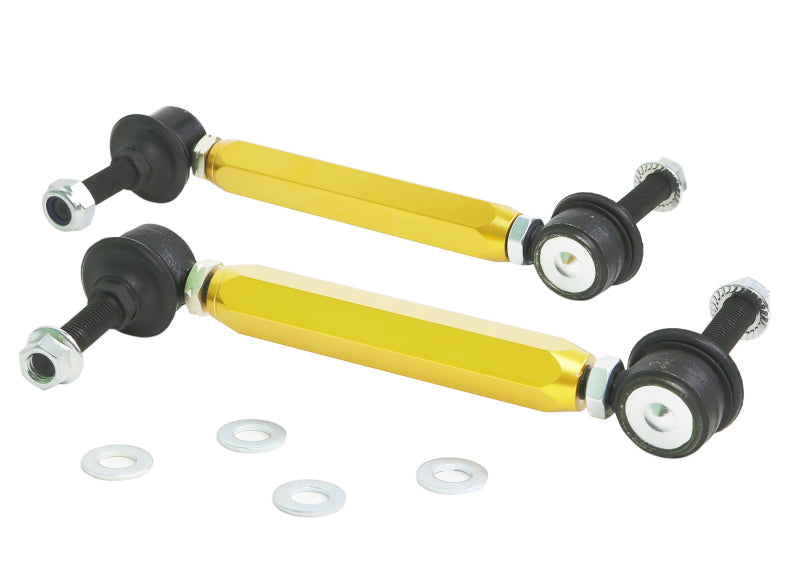
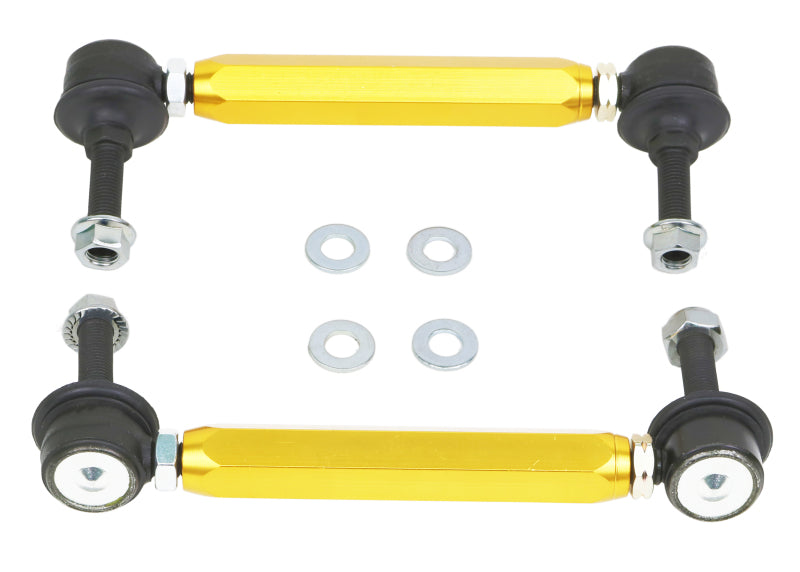
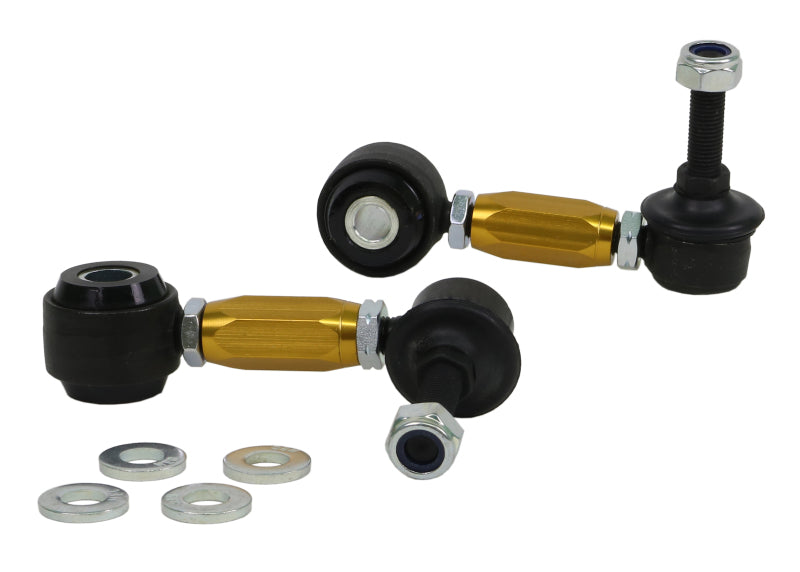
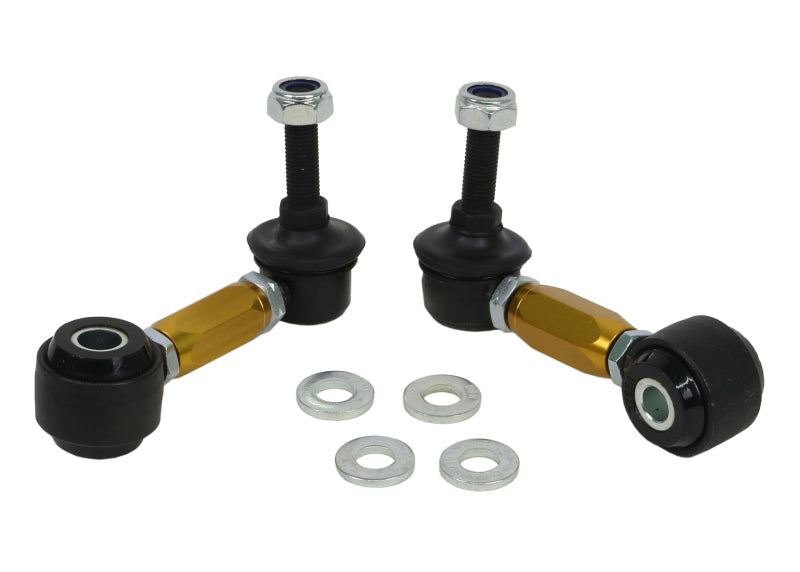
- End links engineered to eliminate slop and preload — precision-fit hardware and adjustable length mean the link isn't absorbing force before it ever reaches the bar. That's the detail most people never think about until they've felt the difference: a sway bar upgrade paired with tired stock end links is still leaving performance on the table.
What it actually feels like
This isn't a "night and day, new car" kind of upgrade — it's a tightening-up. Turn-in gets more immediate. Weight transfer happens when you ask for it, not a half-second later. Body roll settles down, which means your tires stay more evenly loaded through the corner instead of overloading the outside edge. And because the front and rear bars can be adjusted independently, you get to decide how the car behaves at the limit — more neutral, more front-biased, whatever suits how you actually drive it.
It's also one of the best dollar-for-dollar upgrades in terms of what you feel behind the wheel relative to what you spend, especially if your stock end links are already worn or your car's got some mileage on it.
Is this upgrade for you?
If your car still drives on smooth pavement and mild street use, and you've never noticed body roll or vague turn-in, you may not feel a dramatic difference — comfort-tuned suspension is still doing its job for that use case. But if you autocross, track your car, drive mountain roads hard, or you've just started noticing that the car feels looser than it used to, this is one of the most direct ways to fix it without touching your ride height or spring rates.
And if you're already running an aftermarket sway bar on stock end links — that's worth a second look. You might be leaving grip on the table without realizing the link, not the bar, is the limiting factor.
Ready to tighten up your car's handling? Check out our Whiteline Performance sway bar and end link lineup for your platform — and if you're not sure what setup makes sense for how you drive, reach out. No gatekeeping, just answers.