
Stage 1, 2, 3 Clutches: What Actually Changes (A Buying Guide)
"What stage clutch do I need?" is one of the most common questions we get — and it's also one of the easiest to overthink. Stage numbers get thrown around like a badge of honor, but they're not a universal standard, they're not a straight line from "mild" to "wild," and the right pick depends a lot more on how you actually drive and what you're actually making for power than on which number sounds the most aggressive. When you're ready to compare applications, browse the clutch collection.
No gatekeeping, just answers. Here's what stage ratings really mean, what changes between them, and how to think about picking one for your build — whether you're daily driving, weekend canyon carving, or heading to the track.
First, Understand That "Stage" Isn't a Standard
This is the most important thing to know before you buy anything: there's no industry-wide definition of what makes a clutch "Stage 1" vs. "Stage 2." Each manufacturer — McLeod Racing, ACT, Action Clutch, Competition Clutch, Clutch Masters — sets their own stage system based on their own product lineup. A Stage 2 from one brand might land closer to another brand's Stage 1 or Stage 3 in actual torque capacity and pedal feel.
That means the stage number is a starting point for a conversation, not a spec sheet. What actually matters is what's changing underneath that label: disc material, pressure plate clamping force, and flywheel type. Once you understand those three things, the stage number becomes a lot easier to translate across brands.
What Actually Changes Between Stages
Disc Material
This is the single biggest factor in how a clutch feels and how much power it can hold.
- Organic/OEM-style friction material — smoothest engagement, quietest, most streetable. This is what your stock clutch uses, and it's what most "Stage 1" clutches are built around. Great daily manners, but it's also the first thing to give up under sustained abuse or big power increases.
- Kevlar or organic-ceramic blend — a step up in heat and torque capacity while still keeping reasonably smooth engagement. Common in Stage 1-2 territory across most brands.
- Ceramic (puck-style) — significantly higher torque capacity and heat resistance, but engagement gets noticeably more aggressive and on/off. This is where most Stage 2-3 clutches live, and it's also where daily-driver comfort starts to take a real hit.
- Full-face vs. puck-style disc — full-face discs (solid friction surface) engage smoother and last longer under street driving; puck-style discs (segmented friction pads, often sprung or solid-hub) grip harder and shed heat faster but chatter more at low RPM and wear the flywheel surface faster.
Pressure Plate Clamping Force
The pressure plate is what determines how much clamping load is holding the disc against the flywheel — which directly determines how much torque the clutch can transfer before it slips. Higher-stage clutches use stiffer pressure plates with more clamping force to match higher-torque discs.
The tradeoff: more clamping force means a heavier clutch pedal. A big jump in pressure plate stiffness on a car that's mostly driven in stop-and-go traffic is going to get old fast — your left leg will know within the first week.
Flywheel Type
Most clutch kits are sold either as disc-and-pressure-plate-only, or as a full kit including a flywheel. This matters more than people expect:
- Stock-weight or slightly lightened flywheels keep some rotating mass for smooth idle and low-RPM drivability — a good match for street-driven Stage 1-2 builds.
- Lightweight flywheels (aluminum or chromoly) let the engine rev more freely and shed RPM faster on shifts, which is great for track use and aggressive driving, but it also means less flywheel inertia to help you ease off the line smoothly — expect a more abrupt take-off feel in traffic.
If your kit swaps flywheel weight significantly from stock, budget for an adjustment period in daily driving, especially with stop-and-go starts.
Matching a Stage to How You Actually Drive
This is where most people should start — not with a horsepower number, but with a driving profile.
Daily-driven, mild power increase (tune, bolt-ons, light boost bump): Look at Stage 1 offerings across McLeod, ACT, Action Clutch, Competition Clutch, or Clutch Masters. These are built to hold modest torque increases over stock while keeping engagement smooth and the pedal reasonable for daily traffic. If you still need your car comfortable to drive every day, don't let anyone talk you into skipping ahead "for headroom."
Daily-driven but pushing more power (bigger turbo, E85, meaningful tune): Stage 2 is usually the sweet spot — more torque capacity than Stage 1, typically still using a full-face or lightly segmented disc for reasonable streetability, with a firmer but manageable pedal. This is genuinely the most common pick for people building a "fast daily."
Weekend track car / high-power street build: Stage 3 territory, usually ceramic puck-style discs and stiffer pressure plates. Expect more chatter at idle, a noticeably heavier pedal, and less forgiving engagement in stop-and-go traffic. Worth it if you're regularly making the kind of torque that would slip a lower stage — not worth it if your car still spends most of its life commuting.
Dedicated race build: This is where you're looking at full ceramic multi-puck setups, sometimes paired with a lightweight flywheel and even multi-disc setups depending on power level. Streetability isn't the goal anymore — holding power reliably under repeated hard launches and high-RPM shifts is.
A Word on Brands — They're Not All Chasing the Same Thing
Since we carry McLeod Racing, ACT, Action Clutch, Competition Clutch, and Clutch Masters, it's worth knowing that each brand tends to have a bit of a different philosophy in how they build out their stage lineups. For a concrete application example, see this Clutch Masters FX100 clutch kit, then use the vehicle fitment and torque requirements to guide your own selection:
- ACT is known for a wide, clearly segmented stage lineup with a lot of documented street-friendliness at the lower stages — a common go-to for people who want predictable engagement while still stepping up torque capacity.
- Clutch Masters offers a similarly broad range and is well known for their FX series, which spans from mild street-focused kits up through aggressive multi-disc race options.
- Competition Clutch tends to lean into higher torque capacity per stage, which makes their lower stages sometimes feel closer to a "Stage 2" from another brand — worth checking actual torque ratings rather than assuming the number translates directly.
- McLeod Racing has deep roots in drag racing and has historically been strong in high-torque-capacity applications, including twin-disc setups for serious power.
- Action Clutch is a strong value option with a full stage lineup covering the same street-to-track spread, often at a more accessible price point for people building on a budget.
None of these brands is objectively "the best" — the right one depends on your specific application, your power goal, and honestly sometimes just what fits your budget and your car's availability. This isn't a shootout; it's about finding the right spec, regardless of badge.
Don't Forget the Supporting Cast
A clutch upgrade rarely happens in a vacuum. A few things worth checking or replacing at the same time:
- Flywheel resurfacing or replacement — reusing a worn or heat-cracked flywheel against a new disc is a great way to shorten the life of both
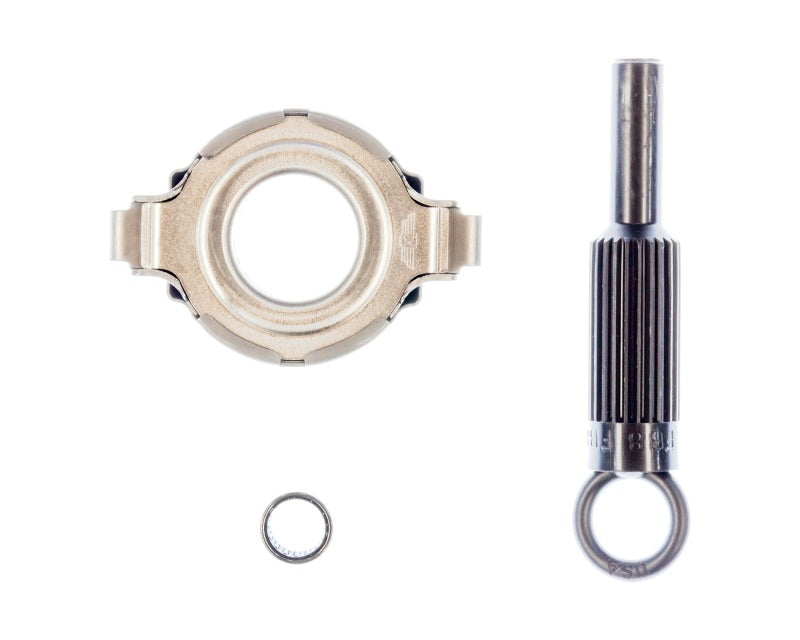
- Throw-out bearing / release bearing — cheap insurance to replace while everything's already apart
- Pilot bearing/bushing — same logic, it's a small part that's a pain to get to twice
- Slave and master cylinder condition (hydraulic clutch setups) — a tired hydraulic system can make even a great clutch feel inconsistent
Quick Buying Checklist
- Start with how you drive, not the biggest stage number available
- Understand the disc material you're getting, not just the stage label
- Check the pressure plate clamping force against your actual torque output — more isn't automatically better if you're driving in traffic daily
- Decide if a flywheel swap fits your priorities (smooth street manners vs. quick-revving track feel)
- Budget for the supporting parts — flywheel resurfacing, bearings, and hydraulics — while you're already in there
- Compare torque ratings, not just stage numbers, when cross-shopping between McLeod, ACT, Action Clutch, Competition Clutch, and Clutch Masters
Still Not Sure What You Need?
Clutch selection is one of those upgrades where getting it right the first time really matters — nobody wants to drop the transmission twice. Tell us your power goal and how the car is actually driven day to day, and we'll help you land on the right stage and brand for your build. No gatekeeping, just answers.